
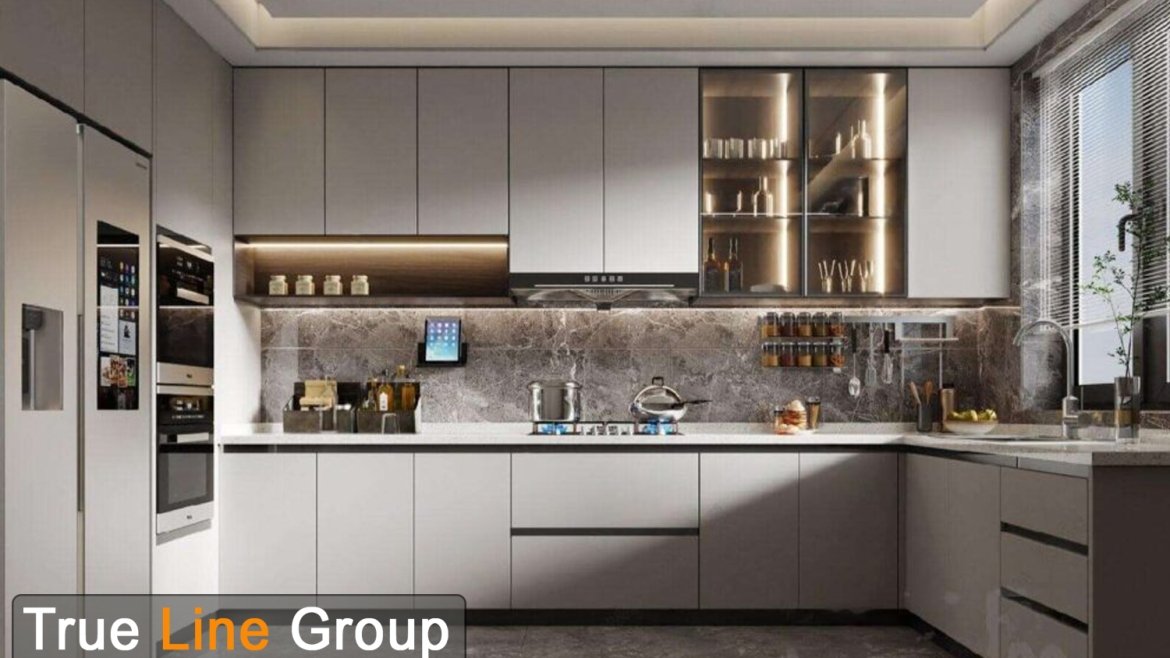
The most effective kitchen layout depends on your available space and how you live, but for 2026, the trend is shifting from the traditional “work triangle” toward functional work zones. Modern layouts now prioritize specialized areas for prep, cooking, cleaning, and socializing to accommodate multiple users and reduce bottlenecks
Top Kitchen Layouts & Why They Work
Whether you have a compact urban kitchen or an expansive open-plan space, these configurations are the most proven for efficiency:
- L-Shaped Layout (Best for Versatility): Uses two adjacent walls to create a natural workflow. It is highly adaptable and works well in small to medium spaces, often accommodating a central island or dining table for better flow.
- Galley Layout (Best for Efficiency): Features two parallel countertops with a central walkway. This layout is a favorite among professional chefs because it keeps everything within arm’s reach and maximizes every inch of narrow spaces.
- U-Shaped Layout (Best for Storage): Wraps counters and cabinets around three walls, offering the most workspace and storage capacity. It is ideal for busy families or multiple cooks because it naturally keeps traffic out of the main work area.
- One-Wall Layout (Best for Small Spaces): Keeps all appliances and cabinets along a single wall. It is the ultimate space-saver for studio apartments or open-concept lofts.
- Island-Centered Layout (Best for Socializing): Incorporates a freestanding workspace that can serve as a prep station, seating area, or even house a secondary sink or cooktop. In 2026, islands are evolving into “command centers” with integrated charging stations and deep drawer storage.
- Peninsula Layout (Best for Zoning): Similar to an L-shape but with an attached counter extension that acts as a room divider. It offers extra seating and storage without requiring as much floor space as a full island.
Tags: Air Conditioning, Heating
Leave a reply